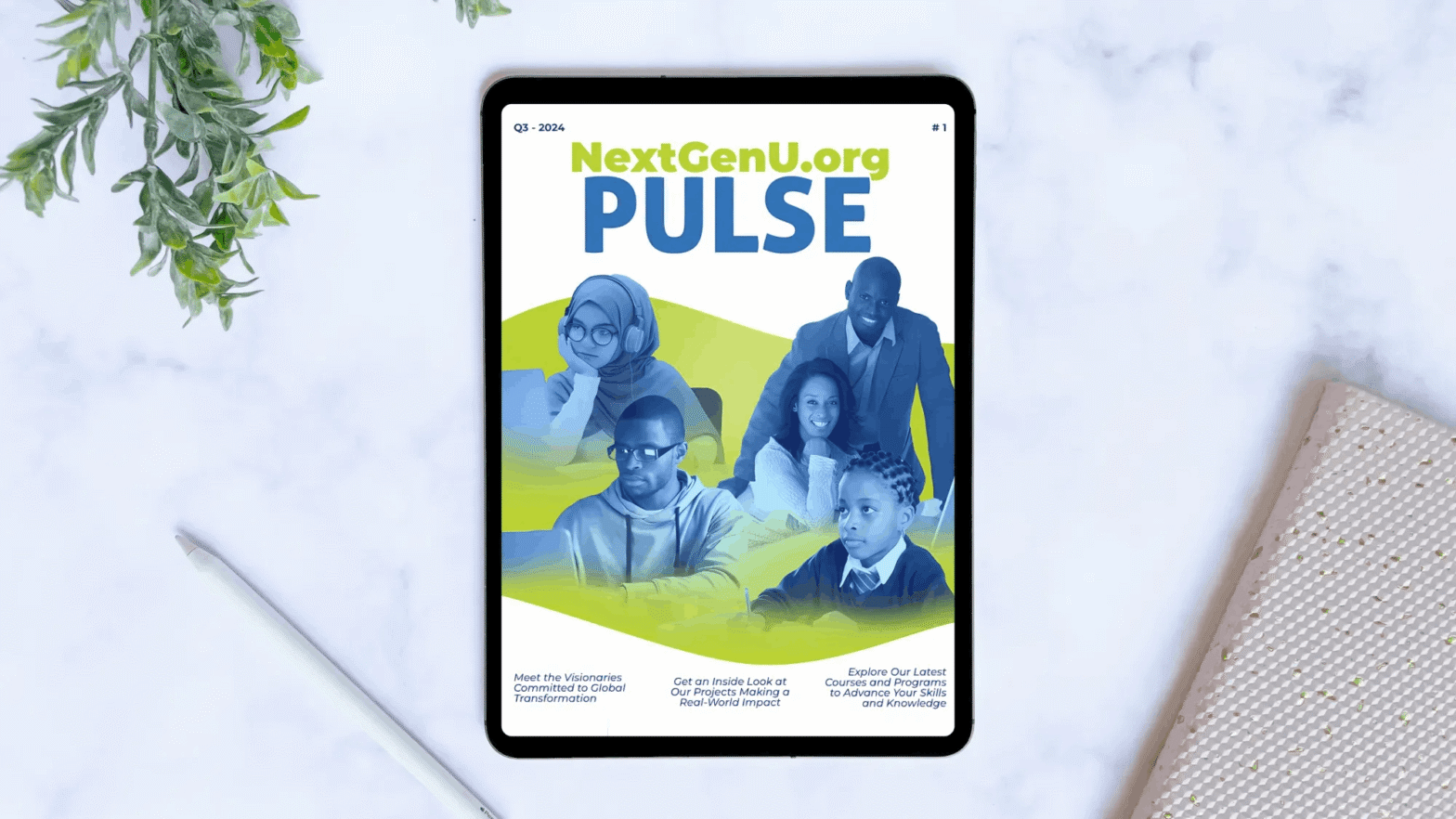
As part of our ongoing mission to democratize high-quality education in public health and beyond, we are thrilled to introduce Pulse, the new quarterly newsletter from NextGenU.org!
Why Pulse?
Pulse is more than just a newsletter—it’s a bridge connecting you with the latest advancements, initiatives, and inspiring stories from the NextGenU.org community. Whether you’re a student, educator, or partner organization, Pulse will keep you informed and engaged with everything happening in our global learning network.
What’s Inside the First Edition?
The inaugural issue of Pulse, released in December 2024, is packed with exciting updates, including:
New Course Launches: We’re introducing transformative programs like the Master of Education for Health Professionals and expanded training in addiction treatment.
Global Initiatives: Get insights into projects like STEPS, which is making an impact in Africa, and our collaborations with UNICEF.
Inspiring Stories: Read testimonials from learners, faculty, and partners shaping health education’s future worldwide.
Stay Connected and Informed
With Pulse, we aim to build a stronger community by sharing valuable resources, highlighting impactful work, and celebrating our collective progress. Your engagement helps drive our mission forward, ensuring that accessible, high-quality education reaches those who need it most.
In today’s rapidly evolving educational landscape, institutions face growing challenges in providing quality, accessible, and affordable learning opportunities. NextGenU.org’s University Network is a pioneering initiative designed to support universities and colleges worldwide by offering free, competency-based courses that can be seamlessly integrated into existing curricula at no cost when students access content from the NextGenU.org website and for very low cost when courseware from NextGenU.org is loaded to an institution’s internal platform.
What is the University Network?
The University Network is a collaborative program that connects higher education institutions with a vast library of free, accredited, and expert-developed courses. These resources cover crucial fields such as public health, medicine, global health, environmental sciences, and more. By leveraging these courses, universities can enrich their programs while reducing financial burdens on students and faculty.
Key Benefits of Joining the University Network
Partnering with NextGenU.org through the University Network enables institutions to:
Expand Learning Opportunities: Provide students with access to top-tier educational content developed by global experts.
Reduce Financial Barriers: Ensure cost-free, high-quality education for students and faculty.
Strengthen Accreditation Compliance: Utilize courses that align with international educational standards and professional competencies.
Foster Global Collaboration: Connect with a network of forward-thinking institutions committed to equitable and accessible education.
Enhance Faculty Resources: Offer professors a wealth of teaching materials, case studies, and research-driven content to support student learning.
How Does the University Network Work?
Seamless Course Integration: Universities can select and embed NextGenU.org’s courses into their programs as standalone subjects or supplementary materials.
Open Access for Students: Learners gain free access to interactive modules, case studies, and assessments, empowering them with practical knowledge.
Faculty and Institutional Support: Professors and academic staff receive guidance on course adoption, student monitoring, and integration best practices.
Global Community Engagement: Universities and students become part of a larger international learning network, fostering cross-border collaboration and knowledge exchange.
Real-World Impact
Through partnerships with institutions across the globe, the University Network has already helped bridge educational gaps by providing thousands of students with quality learning experiences. From improving health education in low-resource settings to equipping professionals with career-advancing skills, the initiative is transforming higher education and making knowledge accessible to all.
How to Join the University Network
Education should be a right, not a privilege. The University Network at NextGenU.org is reshaping how universities deliver learning experiences, ensuring a brighter and more inclusive future for students worldwide. If your institution is interested in joining this transformative initiative, visitNextGenU.org/University-Network for more information.
By championing free, high-quality education, the University Network is setting new standards for academic collaboration and student success. Join today and be part of the movement toward a more equitable global education system!
Environmental health is a vital component of public health, focusing on the connections between our health and the environment in which we live, work, and play. It examines how factors like air and water quality, soil contamination, built environment, climate change, and exposure to hazardous chemicals influence our health and well-being. Addressing environmental health issues helps prevent disease, enhance public safety, and create a more sustainable future. Poor environmental conditions are linked to significant health problems such as cardiovascular diseases, respiratory diseases, cancer, and other chronic conditions. According to the World Health Organization, “poor environmental quality is responsible for 12-18% of global deaths” (World Health Organization [WHO], 2016). These figures emphasize the importance of improving environmental conditions to benefit human health, and safeguarding our planet ensures a healthier world for future generations.
How You Can Advocate for Environmental Health
As individuals, we have the power to advocate for better environmental health. Education is the first step in this process. By learning the core principles of environmental health, we can raise awareness and influence our communities and policymakers. One way to gain in-depth knowledge is through NextGenU’s Environmental Health Course. This comprehensive, free course covers topics such as regulatory controls, pollution sources, and the impact of environmental hazards on human health (NextGenU, n.d.). It empowers learners to make informed decisions and contribute to meaningful change.
Course Overview: A Closer Look at NextGenU’s Environmental Health Modules
NextGenU’s Environmental Health Course offers an in-depth exploration of environmental health concepts and is ideal for individuals who want to expand their knowledge or pursue a career in public health. Developed in partnership with global health leaders, including the U.S. Centers for Disease Control and Prevention (CDC), this course covers key topics such as environmental risk assessment, pollution sources, toxicology, and environmental disaster management (NextGenU, n.d.).
Here’s what learners can expect from each module:
Module 1: Introduction to Environmental Health This foundational module introduces learners to the basic concepts of environmental and occupational health. Exploring the relationship between human health and the environment, covering core issues like pollution and exposure to hazardous substances (CDC, n.d.).
Module 2: Environmental and Occupational Agents In this module, students learn about major environmental and occupational agents that can affect human and ecological health. Covering both direct and indirect impacts of these agents, such as chemicals, biological agents, and physical hazards found in various industries and settings (CDC, n.d.).
Module 3: Community Health This module focuses on environmental hazards and their assessment, offering tools to prevent and control risks to human health. It delves into the mechanisms of toxicity, explaining how certain substances cause harm when humans are exposed (NextGenU, n.d.).
Module 4: Environmental Risk Assessment and Communication Learners are introduced to methods of assessing environmental risks, including tools for hazard identification, exposure assessment, and dose-response evaluation. They are guided through the process of creating risk assessments for specific communities and are introduced to the concept of environmental insult—a model used to predict the impacts of environmental risks (CDC, n.d.).
Module 5: Disaster Planning and Management (Optional) This optional module prepares learners for environmental disaster scenarios, providing essential knowledge for anyone interested in public health or disaster management. It includes a detailed examination of both natural and man-made disasters, offering strategies for risk assessment, communication, and control. The module also touches on the psychosocial impacts of environmental disasters, such as substance abuse and mental health issues, and outlines support strategies for affected populations (CDC, n.d.).
Taking Action: What You Can Do
After educating yourself about environmental health through this course, you can take actionable steps to make a difference. Reducing your environmental footprint is one simple yet impactful way to contribute. You can start by minimizing waste, conserving energy and water, and supporting products and companies with eco-friendly practices (WHO, 2021). Every small action contributes to a larger collective effort to protect the environment.
In addition to personal action, advocating for policy changes is a powerful way to make a lasting impact. Local and national governments play a key role in regulating environmental health, and by advocating for stronger regulations, you can help push for clean energy policies, pollution controls, and measures that promote environmental justice. Your voice matters in shaping policies that protect both people and the planet (CDC, n.d.).
Volunteering with organizations that focus on environmental health is another excellent way to get involved. Whether through clean-up efforts, educational programs, or public health initiatives, there are many ways to contribute. Supporting these causes through donations or active participation helps drive forward the collective mission to protect the environment and human health (WHO, 2021).
Why Choose NextGenU’s Environmental Health Course?
NextGenU’s Environmental Health Course provides an opportunity to explore the field of environmental health with guidance from renowned experts and institutions. It was developed in partnership with leading organizations, including the CDC and the International Society of Doctors for the Environment, and uses world-class learning resources from institutions like the World Health Organization and Yale University (NextGenU, n.d.). The course is competency-based, aligning with public health standards to ensure that learners acquire practical skills.
This course is not just about learning; it is about advocacy and action. Participants will gain the knowledge and tools needed to become effective advocates for environmental health, whether they are working in public health, involved in policymaking, or simply passionate about making a positive impact in their communities.
For those interested in deepening their understanding of how climate change impacts human health—an essential aspect of environmental health—NextGenU also offers a comprehensive Climate Change and Public Health course. This course covers critical topics over five modules:
Module 1: Introduction to Climate Change
Module 2: Causes and Impact of Rapid Climate Change
Module 3: Climate Change Prediction Models
Module 4: Climate Change and Public Health
Module 5: Measures Against Climate Change
Together, these courses equip participants not only with knowledge but also with the tools to become effective advocates for environmental health, enabling them to influence public health, engage in policymaking, or simply make a positive impact in their communities.
Conclusion
Environmental health is essential for promoting both human well-being and the health of our planet. Educating yourself on these issues and taking actionable steps—whether through personal choices, policy advocacy, or volunteering—can make a significant difference. If you’re ready to take the next step in learning about environmental health and how to make an impact, enroll in NextGenU’s Environmental Health Course. This comprehensive course equips you with the knowledge and skills needed to advocate for a healthier world. Together, we can contribute to a future where both people and the environment thrive.
In an ever-changing world, the need for well-trained public health professionals has never been greater. At NextGenU.org, we are committed to breaking down barriers to education and empowering institutions around the globe to train the next generation of public health leaders. Today, we are thrilled to introduce our groundbreaking initiative: Free Master of Public Health (MPH) courses, available to all institutions.
The Vision Behind Free MPH Courses
Our mission at NextGenU.org is simple yet powerful: to democratize education and improve global health outcomes. By offering free, high-quality educational resources, we aim to make advanced public health training accessible to everyone, regardless of financial constraints.
What Makes Our MPH Program Unique?
Comprehensive and Rigorous Curriculum
Our MPH courses cover a broad spectrum of public health disciplines, ensuring that learners gain a well-rounded understanding of the field. From epidemiology and biostatistics to health policy and environmental health, our curriculum is designed to equip students with the knowledge and skills needed to address complex health challenges.
Flexible and Accessible Learning
Understanding the diverse needs of educational institutions, our MPH program is designed to be highly flexible. Institutions can seamlessly integrate our online courses into their existing programs, providing a customizable learning experience for their students. This flexibility extends to the learners themselves, who can access course materials anytime, anywhere.
Global Community
One of the standout features of our program is its global reach. By enrolling in our free MPH courses, students join a diverse and dynamic community of learners from all corners of the world. This international collaboration fosters a rich exchange of ideas and perspectives, enhancing the learning experience.
No Financial Barriers
True to our mission, our MPH courses are entirely free when used form our platform and low-cost when transferred to a partner’s platform. We believe that financial barriers should never prevent someone from pursuing their educational goals. By removing costs, we ensure that more individuals have the opportunity to contribute to the field of public health.
Who Can Benefit from Our Free MPH Courses?
Our MPH courses are designed to benefit a wide range of institutions, including:
Universities and Colleges: Enhance your public health programs by incorporating our comprehensive courses into your curriculum, providing your students with top-tier education without the added cost.
Healthcare Institutions: Offer continuing education opportunities for your staff to keep them abreast of the latest public health practices and innovations.
Non-Governmental Organizations (NGOs): Equip your team with the necessary knowledge and skills to effectively tackle global health issues.
Join Us in Transforming Public Health Education
We invite institutions worldwide to take advantage of this unique opportunity. By adopting our free MPH courses, you can provide your students and staff with high-quality education that prepares them to make a meaningful impact in the field of public health.
Getting started is simple. Contact us today to learn more about how NextGenU.org can support your institution in delivering exceptional public health education at no cost.
Together, let’s build a healthier, more educated world.
The Medical College Admission Test (MCAT) is crucial in becoming a medical professional. This standardized, multiple-choice examination assesses problem-solving, critical thinking, and knowledge of natural, behavioral, and social science concepts prerequisite to the study of medicine. To help you navigate this challenging exam, we’ve compiled a comprehensive guide with preparation tips, common challenges, and essential information.
Understanding the MCAT Exam
The current version of the MCAT exam, launched in April 2015, consists of four sections:
-Biological and Biochemical Foundations of Living Systems
-Chemical and Physical Foundations of Biological Systems
-Psychological, Social, and Biological Foundations of Behavior
Critical Analysis and Reasoning Skills.
At NextGenU.org, we developed specific courses and curated a program that aims to cover the MCAT syllabus. These courses, which are free to the general public and listed under our Sciences courses, aim to mimic the MCAT so that students can understand the exam.
Below is a specific list of courses developed to help students prepare for health professions. The courses are mapped to the MCAT exam and can be a great study tool. Click here to view the MCAT Courses. You can read more about NextGenU.org’s FREE MCAT study program in this brochure.
Intro to Algebra & Trigonometry,
Intro to Statistics
Intro to Sociology
General Chemistry 1
General Chemistry 2
Organic Chemistry 1
Organic Chemistry 2
Physics
Biology
Biochemistry
Writing for Health Sciences—As of 2013, this is not on the MCAT exam, but it is still an essential skill as students have to write essays as part of their university applications.
Most U.S. and Canadian medical schools require MCAT scores for regular admission, and many do not accept scores older than three years.
Preparation Tips
Start early: Prepare well to ensure you have ample time to cover all the necessary content and practice effectively.
Understand the exam format: Familiarize yourself with the exam structure, question types, and timing to avoid surprises on test day.
Review prerequisite courses: The MCAT exam tests content from introductory-level courses, including biology, general and organic chemistry, physics, first-semester biochemistry, psychology, and sociology. Ensure you have a strong foundation in these subjects.
Utilize official MCAT resources: The Association of American Medical Colleges (AAMC) offers a variety of official prep materials, including practice exams, question packs, and the “What’s on the MCAT Exam?” content outline.
Make use of other available resources: In addition to the official MCAT resources, consider utilizing other study material, such as online courses and study groups, and try contacting other people who have previously taken the MCAT exam.
Create a personalized study plan: Develop a study schedule that works for you, taking into account your learning style, strengths, and weaknesses.
Practice, practice, practice: Regular practice with MCAT-style questions and full-length exams is essential to build stamina, improve timing, and identify areas for improvement.
Stay updated on official MCAT Info: The content and format of the MCAT can change over time. Keep updated with any changes by regularly checking the official AAMC website.
Registration deadlines: Be aware of the registration deadlines for the MCAT. Registering early can ensure you get your preferred test date and location.
Test day logistics: Plan your test day logistics in advance. Know the location of the test center, what time you need to arrive, and what you need to bring with you.
Test-taking strategies: The MCAT tests your knowledge and test-taking skills. Learn strategies for answering multiple-choice questions, such as eliminating incorrect answers and guessing when necessary.
Maintaining motivation: Studying for the MCAT is a long-term commitment, and it can be challenging to stay motivated. To keep your motivation high, set small, achievable goals and reward yourself when you reach them.
Common Challenges and How to Overcome Them
Time management: The MCAT exam is lengthy and requires efficient time management. Practice pacing yourself during study sessions and mock exams to develop a sense of timing.
Stress and anxiety: Preparing for the MCAT can be stressful. Incorporate stress-management techniques, such as meditation, exercise, and self-care, into your routine.
Content gaps: Identify your weak areas and focus on strengthening your understanding of those topics through targeted studying and practice.
Burnout: Avoid burnout by setting realistic goals, taking regular breaks, and maintaining a healthy work-life balance.
Eye-Strain: in its entirety the MCAT exam is 7 hours and 30 minutes long, inclusive of breaks and on-boarding before the exam begins, this lengthy exam is completed solely on the computer and it is proven that prolonged computer use, can cause eye-strain, which leads to an increased chance of developing an injury. To overcome this challenge, it is recommended to schedule periodic rest breaks to avoid eye fatigue. Incorporating the use the 20-20-20 rule as a guide: Every 20 minutes, look away to an object at least 20 feet away for at least 20 seconds. Keep your eyes moist, by blinking or using artificial tears, to prevent them from drying out.
Essential Information
Testing limits: You can take the MCAT exam three times in a single testing year, four times over two consecutive testing years, and seven times in your lifetime. Voiding your exam or not showing up on test day counts toward your attempt limits.
Score reporting: Medical schools see all your exam scores, but taking the exam more than once does not put you at a disadvantage. However, it’s important to prepare thoroughly before each attempt.
Accommodations: If you have a condition that requires modifications to the standard testing conditions, you must apply for accommodations through the MCAT Accommodation Services.
Testing environment: The MCAT exam is administered in a quiet, reduced-distraction environment. Familiarize yourself with the testing conditions and permitted items to ensure a smooth experience on exam day.
By understanding the exam format, utilizing effective preparation strategies, and being aware of common challenges and essential information, you can confidently approach the MCAT exam and maximize your performance. Remember that every student’s MCAT journey is unique, and oftentimes, what works for one person may not work for another; as result, it is important to understand your own learning style and needs and curate your own learning program, using these tips give, remember to incorporate self-care routine to keep yourself destressed. Good luck from all of us at Next GenU on your MCAT preparation and in your medical journey!
Healthcare is undergoing a paradigm shift, and the recent webinar hosted by The African Lifestyle Medicine Council gave us a front-row seat to the discussion. The webinar included a panel discussion, and NextGenU.org’s CEO, Miriam Chickering, was an invited guest. She led an exploration of the ins and outs of the test preparation Lifestyle Medicine (LM) course offered for free by NextGenU.org, shedding light on its mission, current impact, and future enhancements.
One key highlight Miriam emphasized was the global reach of the LM course. With participants from over 100 countries, the course has positioned itself as a beacon of accessible education in healthcare. The strategic partnerships with institutions worldwide underscore the course’s commitment to a diverse and inclusive learning environment.
The CEO shared compelling testimonials from learners, illustrating the tangible impact of the LM course. Noteworthy is the positive feedback from physicians who reported improved health outcomes after completing the course. This real-world impact is a testament to the course’s efficacy in translating knowledge into actionable results.
“All the resources and videos help to understand the practitioners and the patients. This course will definitely change my lifestyle behavior.”
Lifestyle Medicine Course Student
“This course transformed my health! My blood sugar levels stabilized (70 – 130 mg/dl), leading to weight loss, better sleep, and improved well-being. It’s the most impactful and evidence-based in the program. I’m recommending it to friends and family with success stories.”
Lifestyle Medicine Course Student
“All the resources and videos help to understand the practitioners and the patients. This course will definitely change my lifestyle behavior.”
Lifestyle Medicine Course Student
“This course transformed my health! My blood sugar levels stabilized (70 – 130 mg/dl), leading to weight loss, better sleep, and improved well-being. It’s the most impactful and evidence-based in the program. I’m recommending it to friends and family with success stories.”
Lifestyle Medicine Course Student
Exciting updates are on the horizon for the LM course. NextGenU.org unveiled plans to introduce scenario-based questions, update resources to reflect the latest research, and provide concise study notes. Perhaps most intriguing is the development of an artificial intelligence (AI) chatbot designed to offer personalized learning support. These enhancements will elevate the learning experience and cater to a global audience.
Mrs. Chickering has invited experts in the field to contribute as reviewers for the course materials. This collaborative approach ensures the course’s educational rigor and relevance. If you’re passionate about advancing health outcomes through education and practice, this is an opportunity to contribute to the course’s evolution.
As we reflect on the insights shared during the webinar, it’s clear that the LM course plays a pivotal role in shaping the future of healthcare education. The commitment of NextGenU.org to democratizing education in Lifestyle Medicine is evident, and the course’s global impact is poised to leave a lasting mark on healthcare practices worldwide.
If you’re intrigued by the prospect of contributing as a reviewer or have questions about the course, don’t hesitate to contact NextGenU.org. Let’s collectively contribute to making a lasting difference in the lives of those we serve.
Stay tuned for more updates from the dynamic realm of Lifestyle Medicine!
Scaling Global Education with Ethically Aligned AI Deployment
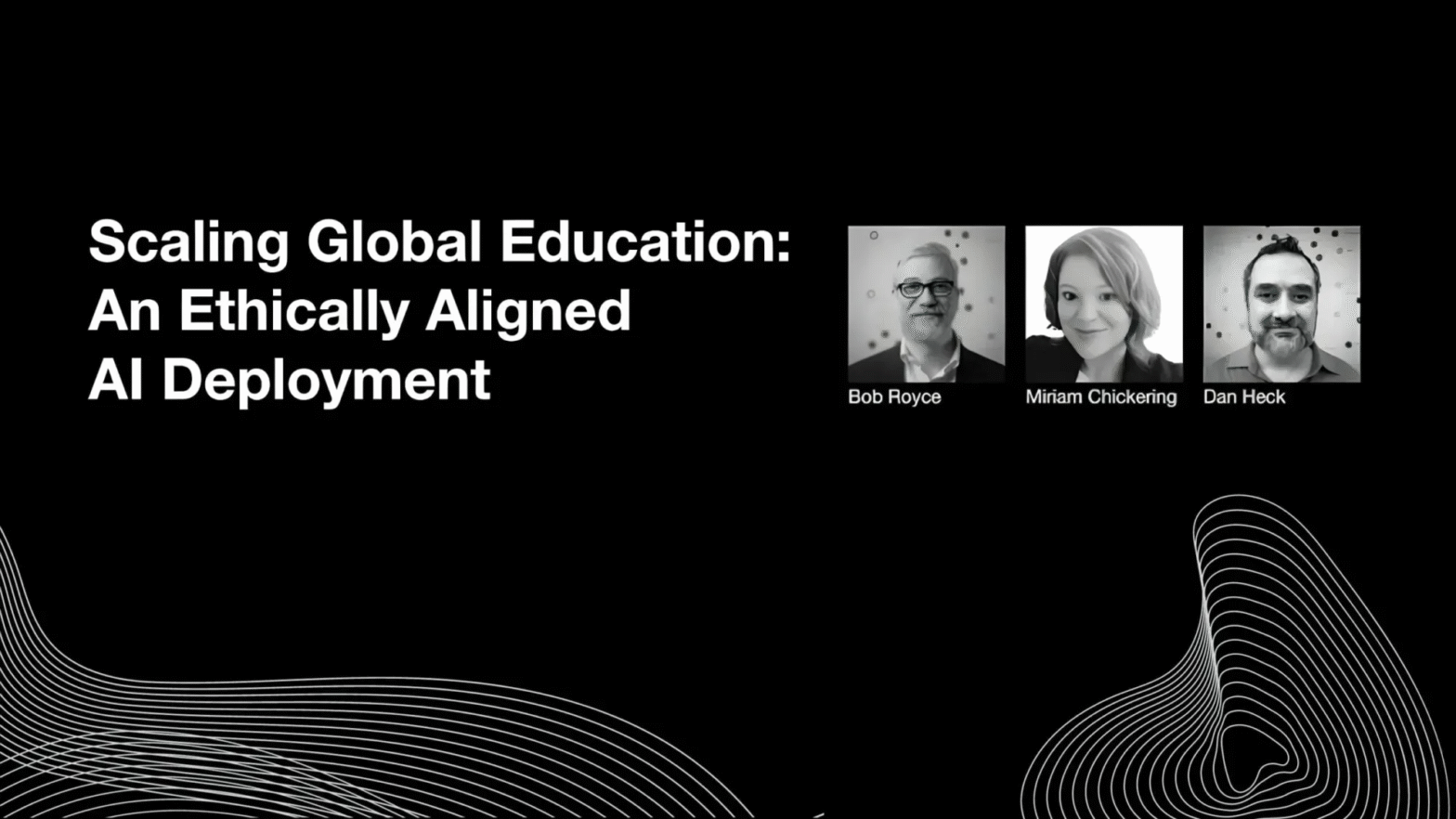
In a recent transformative webinar titled “Scaling Global Education, An Ethically Aligned AI Deployment,” experts gathered to discuss how artificial intelligence (AI) can serve as a potent tool in expanding educational resources worldwide. Bob Royce, the co-founder of The Understanding Group (TUG), hosted this insightful event that featured Miriam Chickering, CEO of NextGenU, and Daniel Heck, TUG’s AI ethicist.
The global reach of education is a pressing issue, as disparities in access to quality resources continue to pose significant challenges. In this second installment of a series focused on developing successful AI strategies that encourage human flourishing, participants were introduced to NextGenU’s journey and how they incorporate generative AI to accelerate their mission.
AI Is All Around Us
AI has seamlessly woven itself into our daily experiences, from planning trips to browsing photos. As Bob highlighted, we are amidst the era of intelligent machines that promise to revolutionize our work and creativity. But with the power of AI comes the necessity for care and precision, recognizing the “jagged frontier” of its capabilities—where AI’s responses can sometimes be misleading despite sounding convincing.
The NextGenU.org Story
Miriam Chickering illuminated how NextGenU.org leverages AI to democratize global education. NextGenU caters to a staggering one million monthly learning sessions and serves over 2,000 institutions worldwide while focusing on health professional and STEM teacher training. Utilizing AI has enabled a quantum leap from content curation to creation, producing localized and accessible curriculum materials.
STEPS Project: A Case Study in Innovation
The STEPS Project, funded by the Global Partnership for Education Knowledge and Innovation Exchange, a joint endeavor with the International Development Research Centre, Canada, was designed to improve STEM education in primary schools in Benin, Cameroon, and the Democratic Republic of the Congo. NextGenU.org exemplified the pivotal role of AI in creating vast educational content through this project. This endeavor, initially set to develop a handful of science lessons, magnified its output to 634 lessons with a mere 10% additional funding from NextGenU.org and AI integration—a testament to efficiency and scalability.
The Transformational Impact of AI Tools
The integration of AI has significantly expedited project timelines, reduced costs, and expanded NextGenU’s outreach capabilities. An organization that once took weeks to draft course structures can now accomplish this task in hours. This efficiency has not only empowered their workflows but also positioned them as a leader in accessible online education.
“Leveraging AI is our response to a moral imperative, rectifying educational injustices and making high-quality education equitable and accessible.”
Miriam Chickering CEO NextGenU.org
AI and Ethical Team Alignment
As we advanced through the webinar, Daniel Heck introduced us to the ethical management framework, underscoring the cultivation of human agency, authentic communication, and the alignment of team goals. This framework was essential in guiding NextGenU’s approach to AI integration, as they ensured that AI adoption enhanced their mission without compromising their commitment to education quality.
Looking to the Future
NextGenU.org’s innovative use of AI is paving the way for personalized, equitable, and universal education. They envision a world where AI-assisted grading systems and tutoring can provide consistent feedback and personalized instruction, addressing the stark educational inequities many face.
Final Thoughts
The webinar concluded with an open Q&A, fostering an engaging discussion that reinforced the power of AI in achieving scalable, high-quality global education. As illustrated by NextGenU.org’s experiences, AI, when ethically aligned and thoughtfully integrated, holds the promise of accelerating educational access and improving the quality of learning experiences worldwide.
With such advancements, we witness a new dawn where education transcends boundaries and becomes a universally accessible and equitable right facilitated by the intelligent application of AI.
To learn more about NextGenU.org and its initiatives or to engage with their work, please visit their website or contact them for collaboration opportunities. As the journey of AI-assisted learning unfolds, let us embrace the potential and work collaboratively to create a brighter, more educated future for all.