
Transforming Public Health Education: Introducing Free MPH Courses from NextGenU.org

In an ever-changing world, the need for well-trained public health professionals has never been greater. At NextGenU.org, we are committed to breaking down barriers to education and empowering institutions around the globe to train the next generation of public health leaders. Today, we are thrilled to introduce our groundbreaking initiative: Free Master of Public Health (MPH) courses, available to all institutions.

The Vision Behind Free MPH Courses

Our mission at NextGenU.org is simple yet powerful: to democratize education and improve global health outcomes. By offering free, high-quality educational resources, we aim to make advanced public health training accessible to everyone, regardless of financial constraints.

What Makes Our MPH Program Unique?

Comprehensive and Rigorous Curriculum

Our MPH courses cover a broad spectrum of public health disciplines, ensuring that learners gain a well-rounded understanding of the field. From epidemiology and biostatistics to health policy and environmental health, our curriculum is designed to equip students with the knowledge and skills needed to address complex health challenges.

Flexible and Accessible Learning

Understanding the diverse needs of educational institutions, our MPH program is designed to be highly flexible. Institutions can seamlessly integrate our online courses into their existing programs, providing a customizable learning experience for their students. This flexibility extends to the learners themselves, who can access course materials anytime, anywhere.

Global Community

One of the standout features of our program is its global reach. By enrolling in our free MPH courses, students join a diverse and dynamic community of learners from all corners of the world. This international collaboration fosters a rich exchange of ideas and perspectives, enhancing the learning experience.

No Financial Barriers

True to our mission, our MPH courses are entirely free when used form our platform and low-cost when transferred to a partner’s platform. We believe that financial barriers should never prevent someone from pursuing their educational goals. By removing costs, we ensure that more individuals have the opportunity to contribute to the field of public health.

Who Can Benefit from Our Free MPH Courses?

Our MPH courses are designed to benefit a wide range of institutions, including:

  • Universities and Colleges: Enhance your public health programs by incorporating our comprehensive courses into your curriculum, providing your students with top-tier education without the added cost.
  • Healthcare Institutions: Offer continuing education opportunities for your staff to keep them abreast of the latest public health practices and innovations.
  • Non-Governmental Organizations (NGOs): Equip your team with the necessary knowledge and skills to effectively tackle global health issues.

Join Us in Transforming Public Health Education

We invite institutions worldwide to take advantage of this unique opportunity. By adopting our free MPH courses, you can provide your students and staff with high-quality education that prepares them to make a meaningful impact in the field of public health.

Getting started is simple. Contact us today to learn more about how NextGenU.org can support your institution in delivering exceptional public health education at no cost.

Together, let’s build a healthier, more educated world.

WHO Releases 2024 Smoking Cessation Guidelines: A Milestone in Global Tobacco Control

Today marks a significant milestone in the global fight against tobacco use. The World Health Organization (WHO) has released its first-ever clinical treatment guideline for tobacco cessation in adults. As members of the Tobacco Expert Group, my colleague Vasant and I are proud to have contributed to this groundbreaking initiative.

Key Highlights of the Guidelines

  1. Comprehensive Approach: The guidelines recommend a range of interventions, including behavioral support, digital cessation tools, and pharmacological treatments.
  2. Focus on Quitters: With over 750 million tobacco users wanting to quit, these guidelines aim to bridge the gap in access to effective cessation services.
  3. Pharmacotherapy Recommendations: WHO recommends varenicline, Nicotine Replacement Therapy (NRT), bupropion, and cytisine as effective treatments for tobacco cessation.
  4. Behavioral Interventions: The guidelines emphasize the importance of brief counseling by health workers and more intensive support through individual, group, or phone counseling.
  5. Digital Solutions: Recognizing the potential of technology, the guidelines suggest the use of text messaging, smartphone apps, and internet programs as adjuncts or self-management tools.
  6. Combination Therapy: The guidelines stress that combining pharmacotherapy with behavioral interventions significantly increases quitting success rates.

Why These Guidelines Matter

Dr. Tedros Adhanom Ghebreyesus, WHO Director-General, highlighted the importance of these guidelines, stating, “This guideline marks a crucial milestone in our global battle against these dangerous products. It empowers countries with the essential tools to effectively support individuals in quitting tobacco and alleviate the global burden of tobacco-related diseases.”

The guidelines address a critical need, as 70% of those wishing to quit tobacco currently lack access to effective cessation services. By providing clear, evidence-based recommendations, WHO aims to help countries and healthcare providers offer the best possible support to those struggling with tobacco addiction.

Looking Ahead

As members of the Tobacco Expert Group, we believe these guidelines will play a crucial role in shaping tobacco cessation efforts worldwide. They provide a roadmap for countries to implement effective, accessible, and affordable cessation services.

We encourage healthcare providers, policymakers, and stakeholders to adopt and implement these guidelines. By doing so, we can take a significant step towards improving global health and reducing the burden of tobacco-related diseases.

For more information, visit the .

Let’s work together to create a world where quitting tobacco is not just a possibility, but a reality for millions.

Author: Dr. Eduardo BiancoDirector, Addiction Training Program for Health Professionals (ATHP)

Mastering the MCAT: The new FREE MCAT Prep Resources from NextGenU.org with Preparation Tips, Common Challenges, and Essential Information

The Medical College Admission Test (MCAT) is crucial in becoming a medical professional. This standardized, multiple-choice examination assesses problem-solving, critical thinking, and knowledge of natural, behavioral, and social science concepts prerequisite to the study of medicine. To help you navigate this challenging exam, we’ve compiled a comprehensive guide with preparation tips, common challenges, and essential information.

Understanding the MCAT Exam

The current version of the MCAT exam, launched in April 2015, consists of four sections:

-Biological and Biochemical Foundations of Living Systems

-Chemical and Physical Foundations of Biological Systems

-Psychological, Social, and Biological Foundations of Behavior

Critical Analysis and Reasoning Skills.

At NextGenU.org, we developed specific courses and curated a program that aims to cover the MCAT syllabus. These courses, which are free to the general public and listed under our Sciences courses, aim to mimic the MCAT so that students can understand the exam.

Below is a specific list of courses developed to help students prepare for health professions. The courses are mapped to the MCAT exam and can be a great study tool. Click here to view the MCAT Courses. You can read more about NextGenU.org’s FREE MCAT study program in this brochure.

  • Intro to Algebra & Trigonometry,
  • Intro to Statistics
  • Intro to Sociology
  • General Chemistry 1
  • General Chemistry 2
  • Organic Chemistry 1
  • Organic Chemistry 2
  • Physics
  • Biology
  • Biochemistry
  • Writing for Health Sciences—As of 2013, this is not on the MCAT exam, but it is still an essential skill as students have to write essays as part of their university applications.

Most U.S. and Canadian medical schools require MCAT scores for regular admission, and many do not accept scores older than three years.

Preparation Tips

  • Start early: Prepare well to ensure you have ample time to cover all the necessary content and practice effectively.
  • Understand the exam format: Familiarize yourself with the exam structure, question types, and timing to avoid surprises on test day.
  • Review prerequisite courses: The MCAT exam tests content from introductory-level courses, including biology, general and organic chemistry, physics, first-semester biochemistry, psychology, and sociology. Ensure you have a strong foundation in these subjects.
  • Utilize official MCAT resources: The Association of American Medical Colleges (AAMC) offers a variety of official prep materials, including practice exams, question packs, and the “What’s on the MCAT Exam?” content outline.
  • Make use of other available resources: In addition to the official MCAT resources, consider utilizing other study material, such as online courses and study groups, and try contacting other people who have previously taken the MCAT exam.
  • Create a personalized study plan: Develop a study schedule that works for you, taking into account your learning style, strengths, and weaknesses.
  • Practice, practice, practice: Regular practice with MCAT-style questions and full-length exams is essential to build stamina, improve timing, and identify areas for improvement.
  • Stay updated on official MCAT Info: The content and format of the MCAT can change over time. Keep updated with any changes by regularly checking the official AAMC website.
  • Registration deadlines: Be aware of the registration deadlines for the MCAT. Registering early can ensure you get your preferred test date and location.
  • Test day logistics: Plan your test day logistics in advance. Know the location of the test center, what time you need to arrive, and what you need to bring with you.
  • Test-taking strategies: The MCAT tests your knowledge and test-taking skills. Learn strategies for answering multiple-choice questions, such as eliminating incorrect answers and guessing when necessary.
  • Maintaining motivation: Studying for the MCAT is a long-term commitment, and it can be challenging to stay motivated. To keep your motivation high, set small, achievable goals and reward yourself when you reach them.

Common Challenges and How to Overcome Them

  • Time management: The MCAT exam is lengthy and requires efficient time management. Practice pacing yourself during study sessions and mock exams to develop a sense of timing.
  • Stress and anxiety: Preparing for the MCAT can be stressful. Incorporate stress-management techniques, such as meditation, exercise, and self-care, into your routine.
  • Content gaps: Identify your weak areas and focus on strengthening your understanding of those topics through targeted studying and practice.
  • Burnout: Avoid burnout by setting realistic goals, taking regular breaks, and maintaining a healthy work-life balance.
  • Eye-Strain: in its entirety the MCAT exam is 7 hours and 30 minutes long, inclusive of breaks and on-boarding before the exam begins, this lengthy exam is completed solely on the computer and it is proven that prolonged computer use, can cause eye-strain, which leads to an increased chance of developing an injury. To overcome this challenge, it is recommended to schedule periodic rest breaks to avoid eye fatigue. Incorporating the use the 20-20-20 rule as a guide: Every 20 minutes, look away to an object at least 20 feet away for at least 20 seconds. Keep your eyes moist, by blinking or using artificial tears, to prevent them from drying out.

Essential Information

  • Testing limits: You can take the MCAT exam three times in a single testing year, four times over two consecutive testing years, and seven times in your lifetime. Voiding your exam or not showing up on test day counts toward your attempt limits.
  • Score reporting: Medical schools see all your exam scores, but taking the exam more than once does not put you at a disadvantage. However, it’s important to prepare thoroughly before each attempt.
  • Accommodations: If you have a condition that requires modifications to the standard testing conditions, you must apply for accommodations through the MCAT Accommodation Services.
  • Testing environment: The MCAT exam is administered in a quiet, reduced-distraction environment. Familiarize yourself with the testing conditions and permitted items to ensure a smooth experience on exam day.

By understanding the exam format, utilizing effective preparation strategies, and being aware of common challenges and essential information, you can confidently approach the MCAT exam and maximize your performance. Remember that every student’s MCAT journey is unique, and oftentimes, what works for one person may not work for another; as result, it is important to understand your own learning style and needs and curate your own learning program, using these tips give, remember to incorporate self-care routine to keep yourself destressed. Good luck from all of us at Next GenU on your MCAT preparation and in your medical journey!

Link to the official MCAT website:

https://auth.aamc.org/account/#/login?goto=https:%2F%2Fmcat.aamc.org%2Fmrs%2F

Link for registering for the MCAT Exam:

https://students-residents.aamc.org/taking-mcat-exam/taking-mcat-exam

Tenika Foster

Author

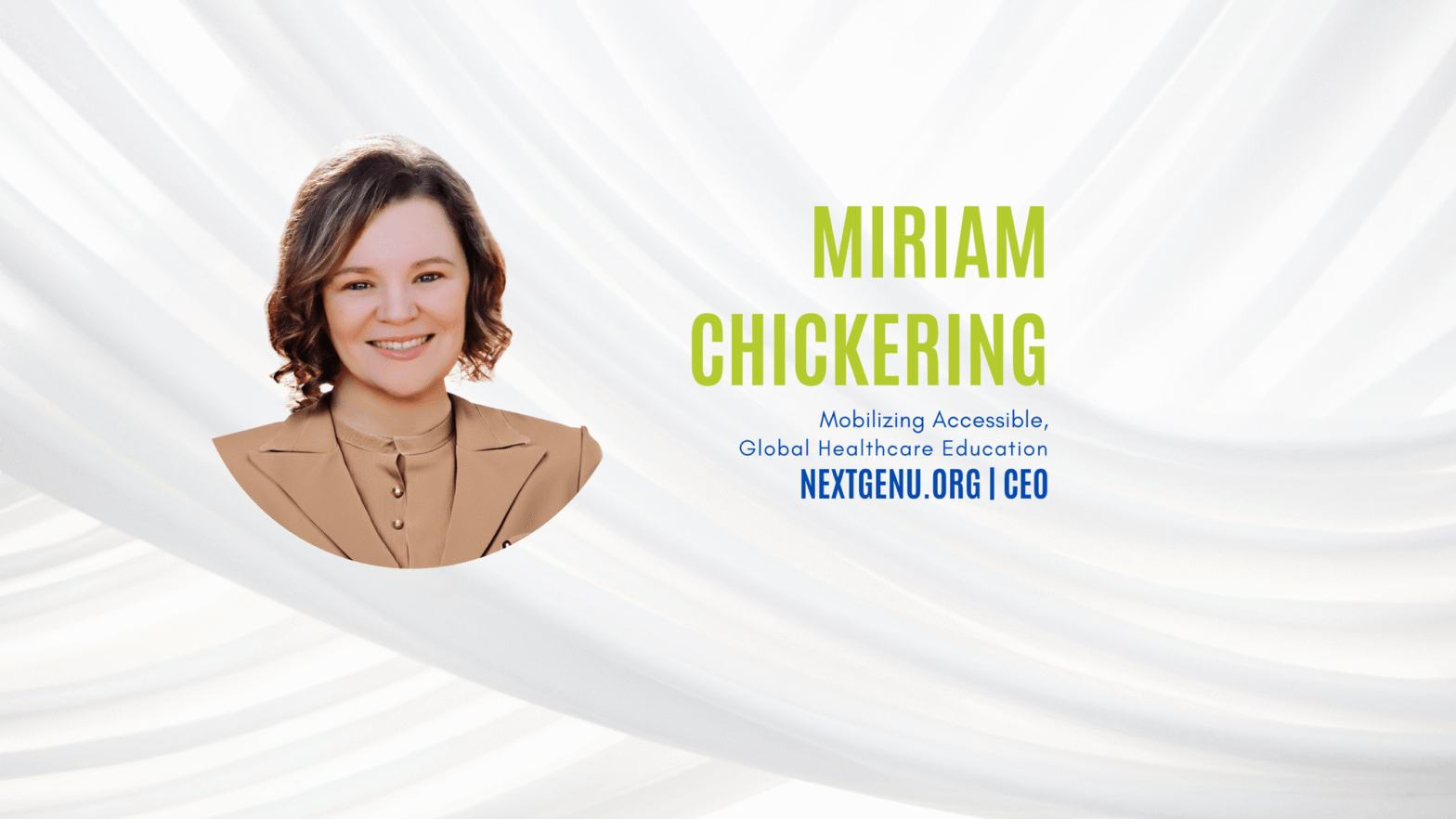
Miriam Chickering, NextGenU.org’s CEO, Mobilizing Accessible, Global Healthcare Education

In today’s rapidly evolving healthcare landscape, access to quality education for healthcare professionals is paramount. Miriam Chickering, CEO of NextGenU.org, is at the forefront of a transformative movement to bridge the healthcare education gap worldwide. Recently featured in CIO Women magazine, Miriam’s pioneering efforts in democratizing healthcare education are commendable and inspiring.

The Mission of NextGenU.org

NextGenU.org is committed to providing free, high-quality education to healthcare professionals throughout the world, ensuring a well-prepared workforce for the future. Through its initiatives at Public Health U, Humanitarian U, The Addiction Training for Healthcare Professionals Program, and STEPS (primary STEM for students and teachers), NextGenU.org aims to democratize education across the healthcare sector.

Transforming Lives through Equitable, Accessible Education

Under Miriam Chickering’s leadership, NextGenU.org offers a full Master’s Degree in Public Health, a PhD in Global Health, and a Master’s in Education for Health Professionals, fostering an inclusive learning community. Learners have access to over 100 courses, including courses in community medicine, psychiatry, mental health and addiction, refugee health, and oncology, pediatric, and medical-surgical nursing.

To learn more, read the full article:


Web Version: https://ciowomenmagazine.com/miriam-chickering-ceo-of-nextgenu-org/

Digital Version: https://ciowomenmagazine.com/the-most-influential-women-leaders-in-edtech/

Unlocking Global Health: A Deep Dive into the Lifestyle Medicine Course

Healthcare is undergoing a paradigm shift, and the recent webinar hosted by The African Lifestyle Medicine Council gave us a front-row seat to the discussion. The webinar included a panel discussion, and NextGenU.org’s CEO, Miriam Chickering, was an invited guest. She led an exploration of the ins and outs of the test preparation Lifestyle Medicine (LM) course offered for free by NextGenU.org, shedding light on its mission, current impact, and future enhancements.

One key highlight Miriam emphasized was the global reach of the LM course. With participants from over 100 countries, the course has positioned itself as a beacon of accessible education in healthcare. The strategic partnerships with institutions worldwide underscore the course’s commitment to a diverse and inclusive learning environment.

The CEO shared compelling testimonials from learners, illustrating the tangible impact of the LM course. Noteworthy is the positive feedback from physicians who reported improved health outcomes after completing the course. This real-world impact is a testament to the course’s efficacy in translating knowledge into actionable results.

“All the resources and videos help to understand the practitioners and the patients. This course will definitely change my
lifestyle behavior.”

Lifestyle Medicine Course Student

“This course transformed my health! My blood sugar levels stabilized (70 – 130 mg/dl), leading to weight loss, better sleep, and improved well-being. It’s the most impactful and evidence-based in the program. I’m recommending it to friends and family with success stories.”

Lifestyle Medicine Course Student

“All the resources and videos help to understand the practitioners and the patients. This course will definitely change my
lifestyle behavior.”

Lifestyle Medicine Course Student

“This course transformed my health! My blood sugar levels stabilized (70 – 130 mg/dl), leading to weight loss, better sleep, and improved well-being. It’s the most impactful and evidence-based in the program. I’m recommending it to friends and family with success stories.”

Lifestyle Medicine Course Student

Exciting updates are on the horizon for the LM course. NextGenU.org unveiled plans to introduce scenario-based questions, update resources to reflect the latest research, and provide concise study notes. Perhaps most intriguing is the development of an artificial intelligence (AI) chatbot designed to offer personalized learning support. These enhancements will elevate the learning experience and cater to a global audience.

Mrs. Chickering has invited experts in the field to contribute as reviewers for the course materials. This collaborative approach ensures the course’s educational rigor and relevance. If you’re passionate about advancing health outcomes through education and practice, this is an opportunity to contribute to the course’s evolution.

As we reflect on the insights shared during the webinar, it’s clear that the LM course plays a pivotal role in shaping the future of healthcare education. The commitment of NextGenU.org to democratizing education in Lifestyle Medicine is evident, and the course’s global impact is poised to leave a lasting mark on healthcare practices worldwide.

If you’re intrigued by the prospect of contributing as a reviewer or have questions about the course, don’t hesitate to contact NextGenU.org. Let’s collectively contribute to making a lasting difference in the lives of those we serve.

Stay tuned for more updates from the dynamic realm of Lifestyle Medicine!

Empowering the Future: NextGenU.org and the International Day of Education

The world celebrates International Day of Education on January 24th to highlight the crucial role of education in promoting global peace and development. Education is a shared responsibility and a public good that transforms lives. NextGenU.org contributes to this transformation on a global scale.

Education is essential for breaking the cycle of poverty and achieving gender equality. However, around 250 million children and youth are not enrolled in schools, and 763 million adults cannot read and write. We need inclusive and equitable quality education to ensure no one is left behind. Denying access to education is unacceptable and impedes progress and development.

The theme for the sixth International Day of Education in 2024 is “Learning for Lasting Peace.” Education can promote peace through transformative learning. NextGenU.org supports this theme by providing a platform for learners to become agents of peace in their communities.

NextGenU.org is a nonprofit organization that hosts an innovative learning portal that offers free healthcare education, breaking down barriers to education worldwide. Regardless of your location, you can access high-quality education and take the first step towards a healthcare career.

On January 24, 2024, let’s celebrate International Day of Education and acknowledge the transformative power of education to build a peaceful and equitable world. NextGenU.org is an example of democratizing education and breaking down barriers to learning. Embracing inclusive education can pave the way for a brighter and more harmonious future.

Alex Cors

Author

Harnessing AI to Transform Global Education

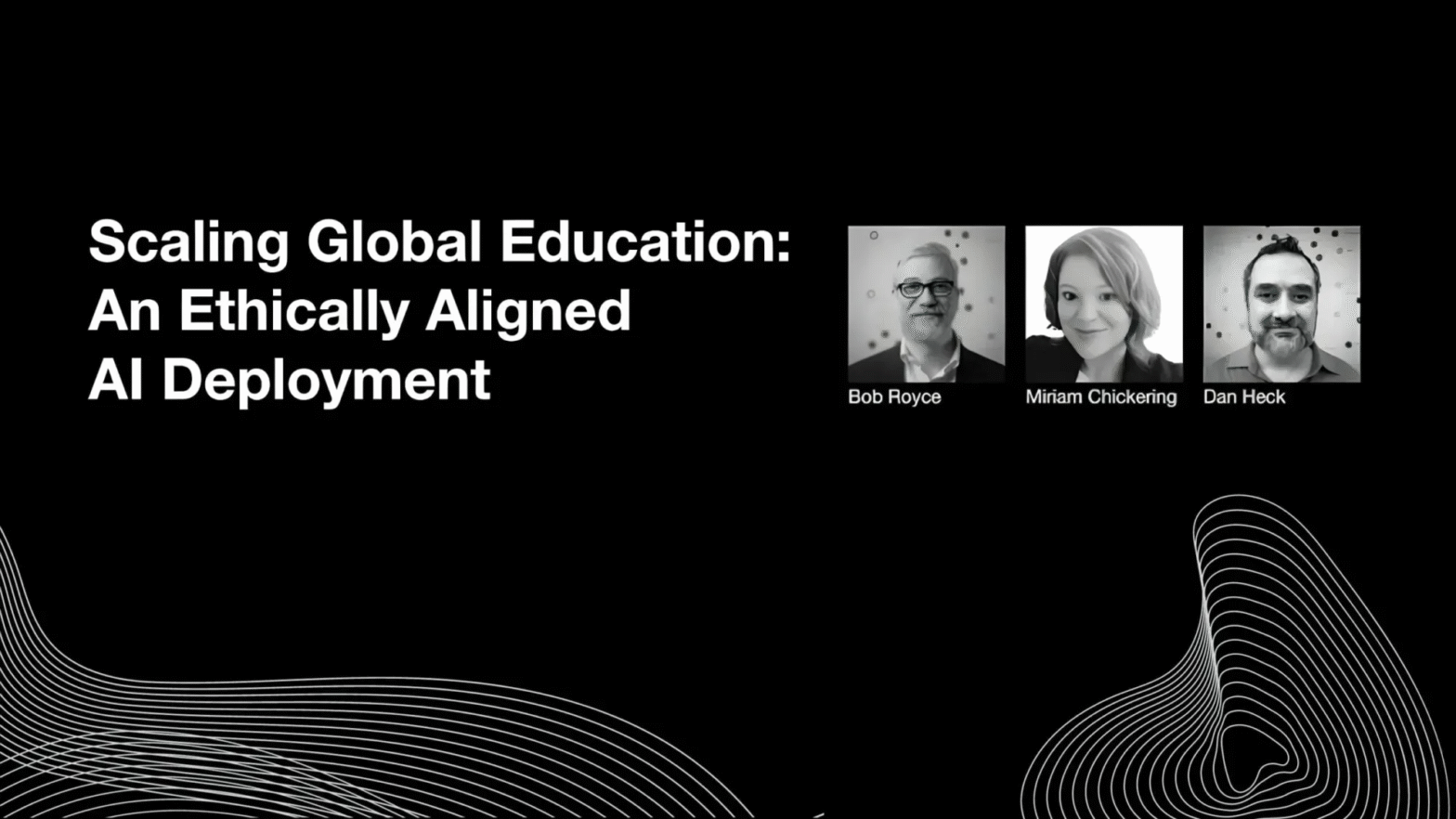
Scaling Global Education with Ethically Aligned AI Deployment

In a recent transformative webinar titled “Scaling Global Education, An Ethically Aligned AI Deployment,” experts gathered to discuss how artificial intelligence (AI) can serve as a potent tool in expanding educational resources worldwide. Bob Royce, the co-founder of The Understanding Group (TUG), hosted this insightful event that featured Miriam Chickering, CEO of NextGenU, and Daniel Heck, TUG’s AI ethicist.

The global reach of education is a pressing issue, as disparities in access to quality resources continue to pose significant challenges. In this second installment of a series focused on developing successful AI strategies that encourage human flourishing, participants were introduced to NextGenU’s journey and how they incorporate generative AI to accelerate their mission.

AI Is All Around Us

AI has seamlessly woven itself into our daily experiences, from planning trips to browsing photos. As Bob highlighted, we are amidst the era of intelligent machines that promise to revolutionize our work and creativity. But with the power of AI comes the necessity for care and precision, recognizing the “jagged frontier” of its capabilities—where AI’s responses can sometimes be misleading despite sounding convincing.

The NextGenU.org Story

Miriam Chickering illuminated how NextGenU.org leverages AI to democratize global education. NextGenU caters to a staggering one million monthly learning sessions and serves over 2,000 institutions worldwide while focusing on health professional and STEM teacher training. Utilizing AI has enabled a quantum leap from content curation to creation, producing localized and accessible curriculum materials.

STEPS Project: A Case Study in Innovation

The STEPS Project, funded by the Global Partnership for Education Knowledge and Innovation Exchange, a joint endeavor with the International Development Research Centre, Canada, was designed to improve STEM education in primary schools in Benin, Cameroon, and the Democratic Republic of the Congo. NextGenU.org exemplified the pivotal role of AI in creating vast educational content through this project. This endeavor, initially set to develop a handful of science lessons, magnified its output to 634 lessons with a mere 10% additional funding from NextGenU.org and AI integration—a testament to efficiency and scalability.

The Transformational Impact of AI Tools

The integration of AI has significantly expedited project timelines, reduced costs, and expanded NextGenU’s outreach capabilities. An organization that once took weeks to draft course structures can now accomplish this task in hours. This efficiency has not only empowered their workflows but also positioned them as a leader in accessible online education.

“Leveraging AI is our response to a moral imperative, rectifying educational injustices and making high-quality education equitable and accessible.”

Miriam Chickering CEO NextGenU.org

AI and Ethical Team Alignment

As we advanced through the webinar, Daniel Heck introduced us to the ethical management framework, underscoring the cultivation of human agency, authentic communication, and the alignment of team goals. This framework was essential in guiding NextGenU’s approach to AI integration, as they ensured that AI adoption enhanced their mission without compromising their commitment to education quality.

Looking to the Future

NextGenU.org’s innovative use of AI is paving the way for personalized, equitable, and universal education. They envision a world where AI-assisted grading systems and tutoring can provide consistent feedback and personalized instruction, addressing the stark educational inequities many face.

Final Thoughts

The webinar concluded with an open Q&A, fostering an engaging discussion that reinforced the power of AI in achieving scalable, high-quality global education. As illustrated by NextGenU.org’s experiences, AI, when ethically aligned and thoughtfully integrated, holds the promise of accelerating educational access and improving the quality of learning experiences worldwide.

With such advancements, we witness a new dawn where education transcends boundaries and becomes a universally accessible and equitable right facilitated by the intelligent application      of AI.

To learn more about NextGenU.org and its initiatives or to engage with their work, please visit their website or contact them for collaboration opportunities. As the journey of AI-assisted learning unfolds, let us embrace the potential and work collaboratively to create a brighter, more educated future for all.

You can access the video recording of the webinar by visiting https://understandinggroup.com/ethical-ai-alignment-december-webinar

Alex Cors

Author

Understanding the Impact of Nicotine on Cardiovascular Health: Insights from the World Health Federation Policy Brief

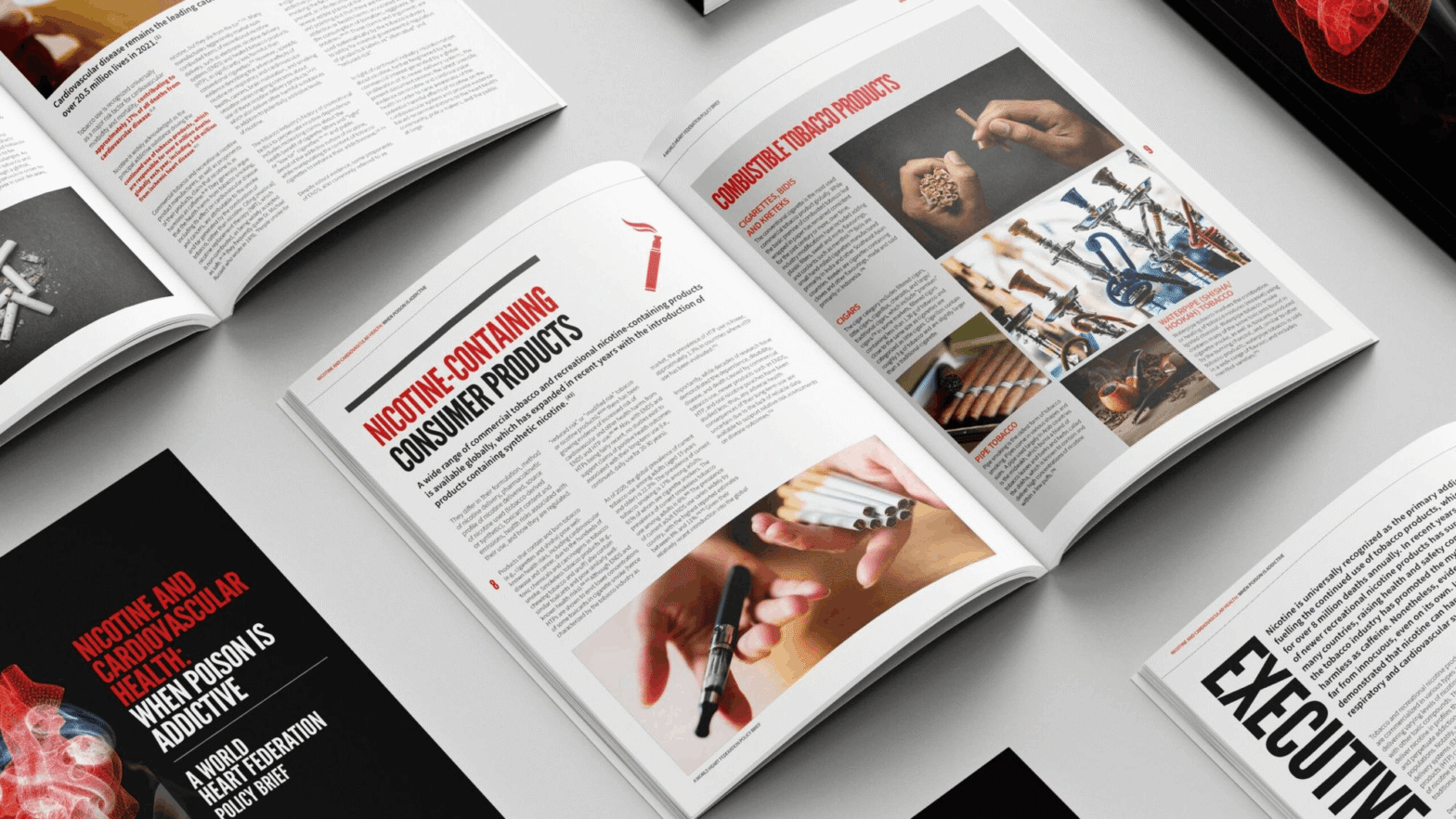
The World Heart Federation (WHF) has recently unveiled a pivotal paper on Nicotine and Cardiovascular (CV) health, marking a significant step in understanding this critical public health issue. A key contributor to this milestone is Prof. Eduardo Bianco, representing the Frank Foundation (known online as NextGenU.org), whose expertise has been instrumental in this research.

Prof. Eduardo Bianco stands as a figure of immense knowledge and dedication in the field of tobacco control and public health. Affiliated with the Frank Foundation for International Health, Eduardo has been a cornerstone in shaping policies and guidelines on a global scale. He brings a wealth of experience and a deep commitment to improving public health outcomes.

The WHF policy brief delves into the intricate relationship between nicotine and cardiovascular health. It highlights how nicotine contributes to heart diseases and the broader implications for public health and policy. The brief serves as a crucial resource for healthcare professionals, policymakers, and the public alike, offering insights into mitigating the risks associated with nicotine use.

As a co-author of the policy brief, Eduardo’s role has been pivotal. His insights and expertise in tobacco control have significantly shaped the findings and recommendations of the brief. At the Frank Foundation, he serves as the Director of International Policy Education in Addiction, playing a key role in developing and disseminating educational materials on addiction and public health​​.

Having completed the in-person meeting

The policy brief is not just a document; it’s a beacon of hope in the fight against tobacco use. It represents a comprehensive approach to understanding and combating the impacts of nicotine on heart health. The Frank Foundation for International Health, under Eduardo’s guidance, is poised to use this brief as a tool to further its mission of promoting health education and awareness worldwide.

We invite our readers to delve into the full WHF policy brief for an in-depth understanding of this critical issue. Join us in our journey to disseminate knowledge and foster a healthier, tobacco-free world.

The WHF policy brief on Nicotine and CV health, with contributions from Dr. Eduardo Bianco and others, is more than just a piece of research; it’s a step towards a healthier future. The Frank Foundation for International Health continues to be at the forefront of this journey, empowering individuals and communities with the knowledge to make informed health decisions.

Links and References:

Progress Update: First WHO Smoking Cessation Guidelines

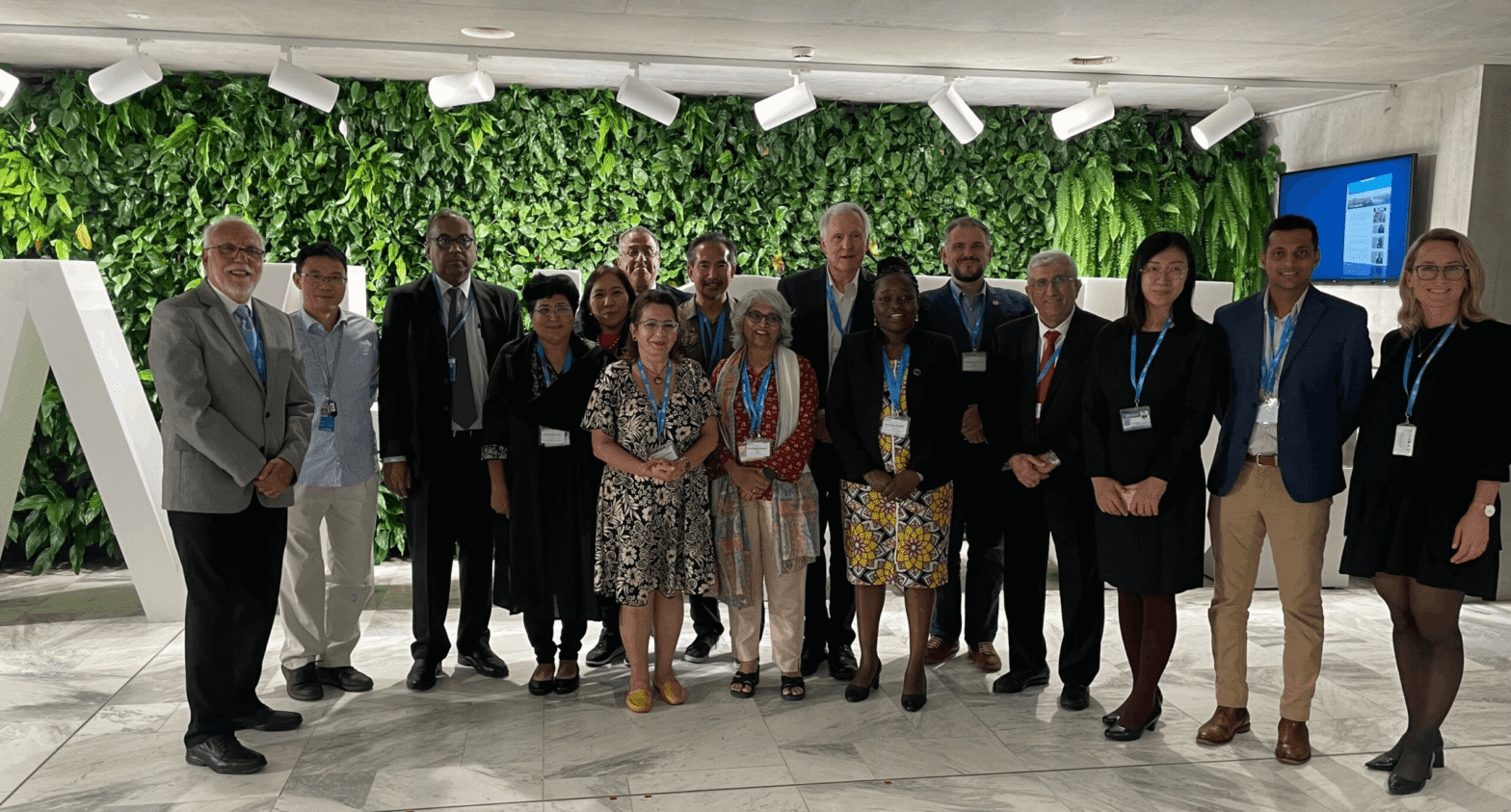
In the world’s relentless battle against tobacco use, a significant milestone is on the horizon. The first World Health Organization (WHO) Smoking Cessation Guidelines are taking shape, thanks to the dedicated efforts of the Guidelines Development Group (GDG). In this blog post, we delve into the recent in-person meeting held in Geneva and its outcomes, shedding light on the crucial steps toward finalizing these essential guidelines. We were proudly represented by Dr. Eduardo Bianco, Director of International Policy Education in Addiction for the Addiction Training Healthcare Professionals Program at the Ulrich and Ruth Frank Foundation for International Health, the delegate representing the Americas.

From September 4 to 6, the GDG convened in Geneva for an intensive in-person meeting to further advance the development of the WHO Smoking Cessation Guidelines. This diverse group comprised two experts from each region—mirroring the global nature of this pressing challenge. In addition to these regional experts, the GDG consisted of two coordinators along with WHO specialists in statistics and guideline development and the dedicated WHO Smoking Cessation team.

Months of prior online collaboration laid the foundation for the substantive discussions held during the meeting. The GDG members engaged in extensive and in-depth exchanges, meticulously analyzing various topics pertaining to smoking cessation. By harnessing the collective expertise and experience of the GDG, these discussions aimed to shape the forthcoming guidelines, ensuring their effectiveness and relevance in addressing the multifaceted dimensions of smoking cessation.

We are pleased to report that the GDG successfully tackled all the scheduled agenda items within the allocated time frame. The comprehensive nature of the discussions allowed for an exploration of the various aspects of smoking cessation. From evidence-based strategies to targeted interventions, the GDG left no stone unturned in its pursuit of formulating impactful recommendations to combat smoking.

Having completed the in-person meeting, the dedicated coordinators and the WHO team will now proceed to review and analyze the outcomes and insights generated during these discussions. Their collective expertise will be applied to refine and consolidate the latest version of the guidelines. Once this version is ready, it will be shared with the GDG members for their approval.

The WHO’s vision for the Smoking Cessation Guidelines involves finalizing them by the end of this year, with a subsequent launch planned for the following year. The imminent publication of these guidelines instills hope and anticipation, as they represent a significant step forward in the global fight against tobacco use. We’re proud of the contributions of Dr. Eduardo Bianco of the Ulrich and Ruth Frank Foundation for International Health to this global endeavor.

First WHO Smoking Cessation Guidelines

The recent in-person meeting of the GDG in Geneva marked a pivotal moment in the development of the First WHO Smoking Cessation Guidelines. The expertise and commitment demonstrated by the GDG members, along with the support of the WHO team, reinforce the significance of this initiative. As we eagerly await the launch of these guidelines, we recognize the collective efforts that have gone into shaping a document that will serve as a beacon for smoking cessation efforts worldwide. Together, we can look forward to a future where the detrimental impact of tobacco use is diminished, promoting healthier and more vibrant communities globally.

Seema Persaud

Author

Lifelong Customer Podcast: ‘Revolutionising Healthcare, a Conversation with Miriam Chickering.

On July 5th, 2023, our CEO at the Frank Foundation and founder of Nurses International, Miriam Chickering, joined host and CEO Brad Hammond on the Lifelong Customer Podcast. The Lifelong Customer Podcast focuses on discussing ways in which industry leaders are building lifelong relationships with their customers. On this special episode, the conversation with Miriam was entitled ‘Revolutionizing Healthcare, a conversation with Miriam Chickering.’

In this inspiring episode, Miriam shared her remarkable journey in global healthcare education. Pivotal moments in her journey began with volunteering as a tutor in a local nursing program which sparked the idea to tap into the opportunity to use her nursing education background to not only reach her local students but to create efficiencies in healthcare education which could potentially reach every healthcare student worldwide.

Through global education efforts, NextGenU.org enables learning institutions to expand the reach of healthcare education to address the projected shortfall of 10-15 million healthcare workers by 2030, predicted by the World Health Organization (WHO).

During the podcast, Miriam shared insights she has learned along the way and the continuous learning required to ensure steady growth. The importance of determination, problem-solving skills, and the ability to tap into global human resources while managing stringent budgets were evident in the discussions. She also shared about the strategic process of building a global team and insights into the incredible growth of NextGenU.org from a team of 3 persons to 40 within 18 months during the pandemic when use skyrocketed.

The engaging discussion delved into how the team navigated long hours, communicating in different time zones and languages, and showed resilience in the face of challenges while ensuring that quality and standards are never compromised. Valuable lessons were also shared about scaling projects while meeting acute user needs, ensuring holistic organizational growth, and maintaining integrity in the pursuit of improving global healthcare education.

The entire episode is available at the following link:  https://thelifelongcustomerpodcast.buzzsprout.com/1618630/13126580-revolutionizing-healthcare-education-a-conversation-with-miriam-chickering-ceo-of-nextgenu-org

Seema Persaud

Author